A soil test is a small cost that tells your engineer what is under the ground. Without it, the foundation is designed on an assumption.
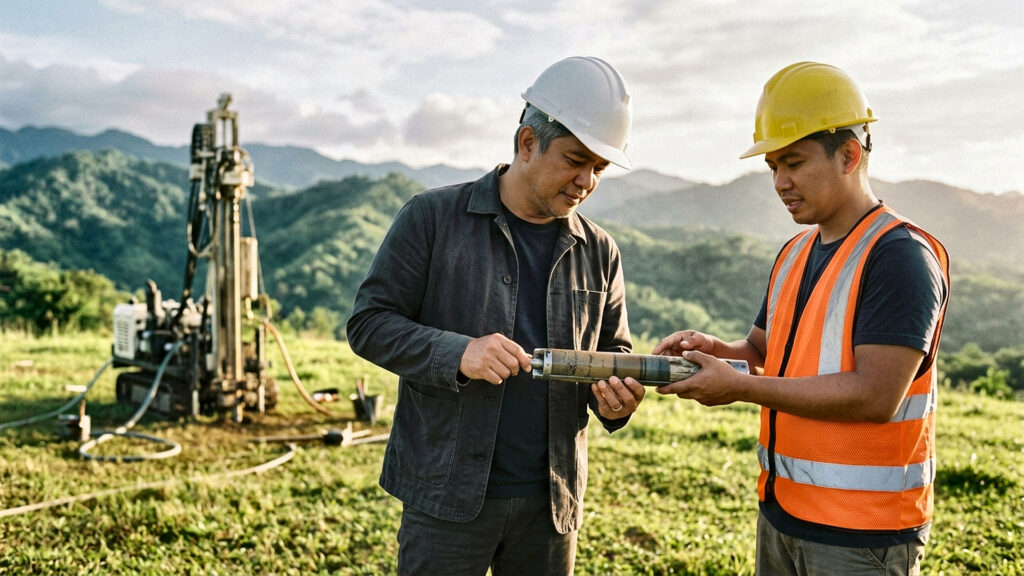
Soil tests are carried out by qualified testing firms, and your engineer interprets the results. This post only explains why to ask for one.
1. What a soil test tells us
It tells us how strong the ground is, how it holds water and how deep we may need to go for a solid layer. Different layers of soil behave differently under a building.
The results go into the design of the foundation.
2. Why it comes first
The foundation is designed before the rest of the structure, and it sits on the soil. If the soil is weaker than assumed, the foundation may need to be larger or deeper.
Finding out after construction starts is much more expensive than finding out before.
**Before design**: A soil test belongs before the structural design, not after it.
3. When to ask for one
Ask for a soil test on sloped lots, on filled land, near water or when your neighbours report settlement. Ask your engineer whether your lot needs it.
Even on a flat lot with no known issues, a test can protect a major investment.
4. What it costs
The cost depends on the number of test points and the depth. Ask for a quote from a qualified testing provider, and ask your engineer where the test points should be.
Compare the cost with the cost of the foundation it protects.
5. What to ask your team
Ask who orders the test, who reads the report and how the results change the design. Ask to see the summary.
Keep the report with your project papers for future work.
6. Ask for a clear report
Ask your engineer to explain the results in plain words, including any risks they found.
A soil test is also a record. Future builders, buyers and engineers may want to see it.