Rework is building something twice. It usually starts with unclear drawings, late decisions or changes made on site, and the owner often ends up paying for it.
This is a general guide. Your contract decides who is responsible for what, and a lawyer can review it for you.
1. Where rework comes from
Unclear or conflicting drawings, late changes, missing approvals and poor workmanship all lead to rework. Some is the contractor’s fault, some the owner’s and some is no one’s.
Knowing the source tells you how to avoid it.
2. Prevent it on paper
Finalise decisions before construction. A change on paper costs a conversation, while a change on site costs demolition and new work.
Ask for coordinated drawings and a clear scope.
3. Prevent it on site
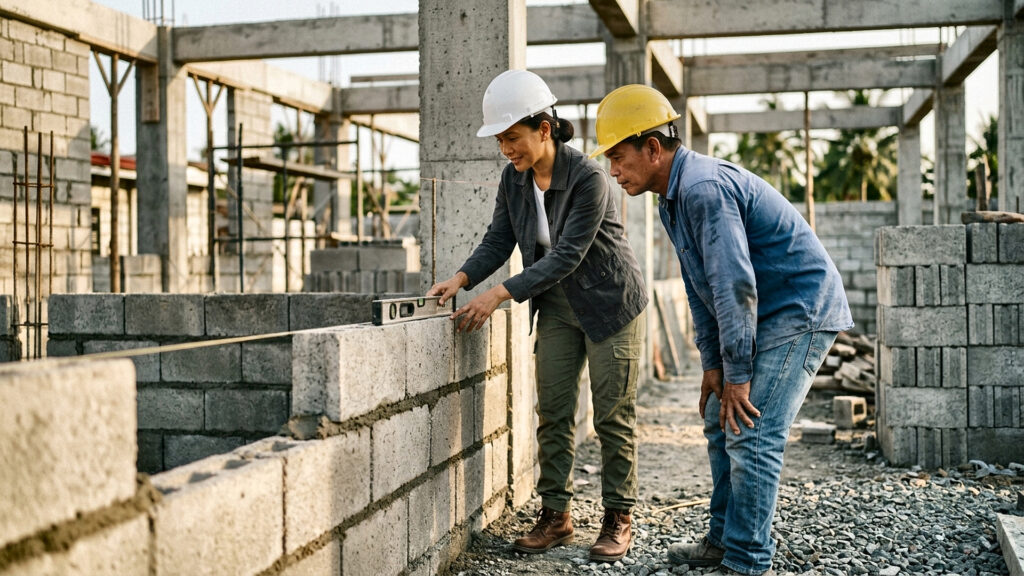
Ask for inspections at set stages, before work is covered by the next stage. Check dimensions and quality early, when fixing is still cheap.
Keep a log of instructions, changes and approvals.
**Inspect first**: Check the work before the next stage covers it.
4. Agree how it is handled
Ask your contract who pays for work that fails inspection and how disputes are settled. Agree this before work starts.
Keep every change in writing with its cost.
5. Learn from past projects
Ask your architect and contractor what caused rework in their past projects and what they changed afterwards. Honest answers show how they work.
A team that learns from its mistakes tends to repeat fewer of them.
Choose people who explain things clearly and who put agreements in writing. Good communication helps reduce rework.
Ask your architect to visit the site at key stages, as the scope allows, to catch mistakes early.
A short weekly walk-through with your architect and contractor, with notes sent afterwards, keeps small issues from growing. Ask the contractor to flag any doubt about the drawings before work continues, and not after it is built.