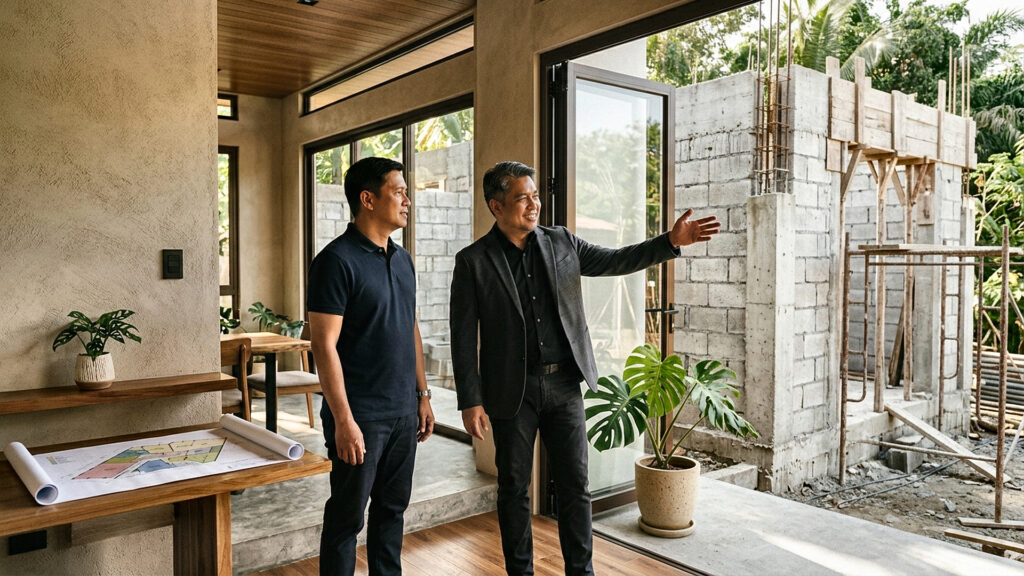
Building in phases can help when the budget grows over time, but only if the early phases are planned to allow the later ones. Plan the whole house first, then build it in parts.
Phasing suits some projects and not others. Ask your architect whether it fits your lot, your budget and your timeline.
1. When phasing works
It works when you have a clear final plan and the money arrives in stages. The early phases should leave the house safe, dry and usable.
It works less well when the project is small or when each phase would need to demolish the previous one.
2. Plan the whole house first
Design the full house and decide which parts come first. The foundation, columns and utilities for later phases are often prepared in the first phase.
Ask your engineer what must be built now to avoid breaking anything later.
**Plan the whole**: Phase the building, not the planning.
3. Think about living during construction
If you live in the house while building, plan for dust, noise, safety and privacy. Ask the contractor how work will be separated from the living areas.
Ask whether the early phase can stand alone if the next one is delayed.
4. The costs of phasing
Phasing can mean paying for more than one mobilisation, and prices may change between phases. Ask your team to estimate these extra costs.
Keep a record of the approved plan, so later builders follow it.
5. Permits and approvals
Ask the local office whether a permit can cover the whole building even if it is built in stages, and how to handle changes between phases.
Keep your documents together and up to date.
6. Think about safety
Keep the work area separate from the living area, with safe walkways and covered openings. Ask your contractor how safety is handled between phases.
Phasing needs discipline. Write down what each phase will include, how much it will cost and what must be true before the next phase begins.