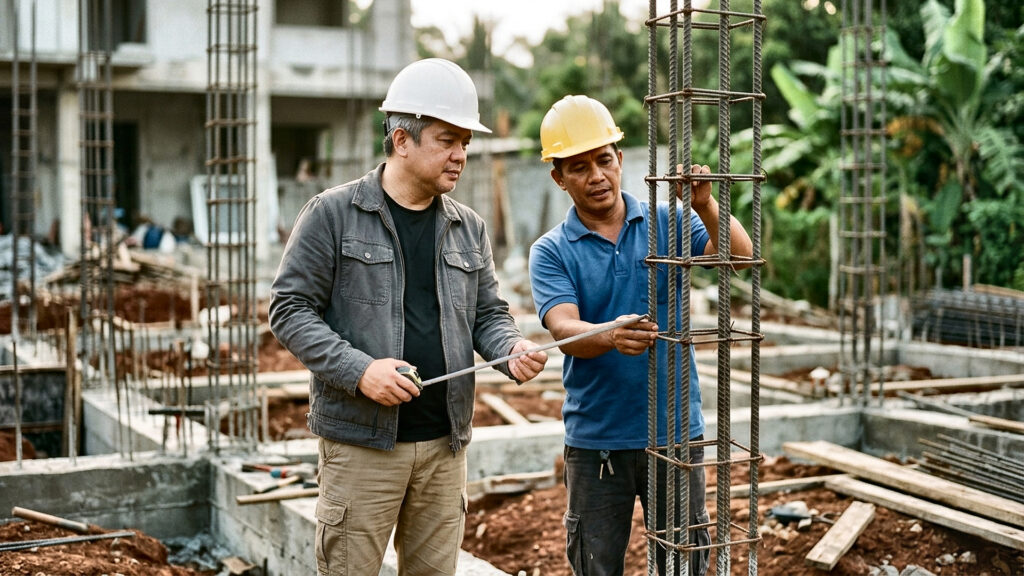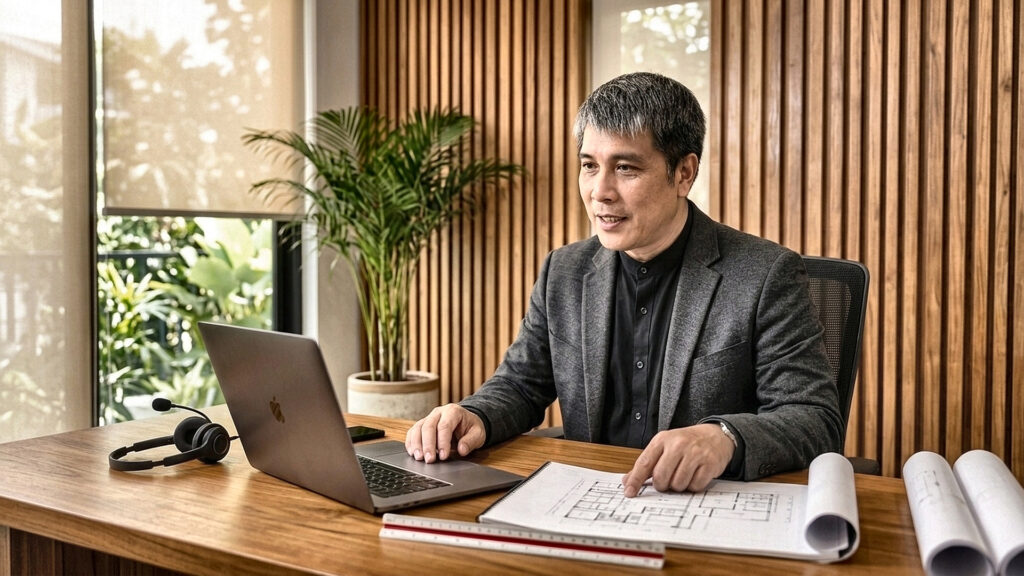
Building in Rizal while working abroad is possible when the communication is planned. Clear updates, a trusted person on site and good records matter most.
We have worked with clients in several countries. These points reflect general practice, and your contract should spell out the details.
1. Set the rhythm
Agree a regular call, for example weekly, with a short written summary after each one. Include the time zone in every meeting invitation.
Decide how urgent questions are raised and who answers them.
2. See the work
Ask for dated photos and short videos from the site at set stages. Ask for a walk-through video before each payment.
A 3D model can help you review the design remotely before building starts.
3. Name someone you trust
Consider naming a family member or a representative who can visit the site and sign documents if needed. If a legal authority is required, speak to a lawyer about how to give it.
Make sure your architect and contractor know who is allowed to make decisions.
**Not legal advice**: If you need someone to sign for you, speak to a lawyer.
4. Handle money carefully
Agree payment stages tied to finished work, and keep receipts. Use traceable payment methods and avoid paying large amounts ahead of the work.
Keep a shared record of every payment and change.
5. Prepare for emergencies
Agree who can be reached if something urgent happens on site and what the contractor should do. Keep a list of numbers shared with everyone.
Ask who has the authority to stop work if there is a safety issue.
Share a list of your priorities with the team so they know what matters most to you when decisions must be made without you.
Consider asking for a short video summary after each important site visit.
A quiet routine, kept every week, does more than occasional long calls when problems have already grown.